
An aspirating smoke detection system (ASD) is an active fire detection system that continuously draws air from a protected area through sampling pipes. The air passes through a filter into a detection chamber, where a sensor analyzes it for smoke particles.
Unlike a conventional point detector, which waits for smoke to reach it, an aspirating smoke detector transports air samples to the sensing unit. This makes ASD useful where early warning, high sensitivity, wide coverage, or discreet detection is required.
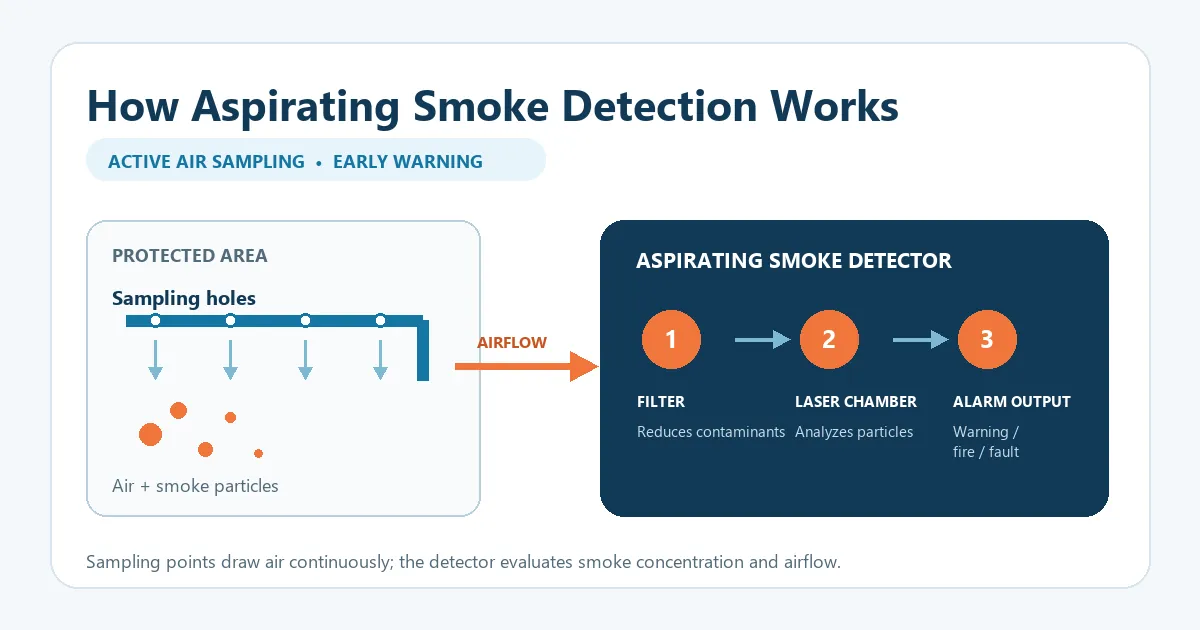
How Does Aspirating Smoke Detection Work?
A typical aspirating fire detection system contains:
- Sampling pipes and holes that collect air from selected locations.
- An aspirator that continuously pulls air through the network.
- A filter and laser detection chamber that reduce contaminants and analyze particles.
- Alarm and fault outputs that report conditions to users or a fire alarm control panel.
The detector also monitors airflow. A major change can indicate a blocked hole, damaged pipe, or disconnected section. Many ASD systems provide several programmable thresholds, allowing staged warnings as smoke concentration rises.
Why Use an Aspirating Smoke Detector?
Early warning
High-sensitivity ASD systems can identify small concentrations of airborne smoke before smoke becomes dense. Actual warning time depends on sensitivity, pipe design, airflow, fire type, environment, and commissioning.
Active air sampling
ASD does not rely only on smoke naturally reaching a ceiling detector. Sampling points can be positioned around the expected smoke path, including ceilings, raised floors, cabinets, and return-air locations.
Flexible installation and maintenance
Small sampling points can be used where visible detectors are undesirable. The main detector can remain accessible while pipes extend into high, cold, restricted, or concealed areas.
Staged alarms and integration
Depending on the model, ASD units may offer programmable relays, RS485 communication, event logs, and multiple warning levels. They can operate independently or connect to a compatible fire alarm control panel.
ASD vs. Conventional Point Smoke Detection
| Consideration | Aspirating smoke detector | Point smoke detector |
|---|---|---|
| Sampling | Actively draws air through pipes | Relies on smoke reaching the detector |
| Sensitivity | Often wide and configurable | Usually intended for general detection |
| Coverage | One unit can serve many sampling points | Detectors are distributed individually |
| Alarm stages | Often supports multiple thresholds | Commonly provides one fire state |
| Installation | Requires calculated pipe design | Usually simpler to place |
| Maintenance | Main unit can be accessible | Each detector may require direct access |
ASD is not automatically the right solution for every project. It requires correct pipe design, installation, airflow verification, and commissioning.
Common ASD Applications
Data centers and telecommunications rooms
Strong ventilation can dilute and move smoke. ASD can sample from ceiling areas, raised floors, equipment spaces, or return-air paths. Staged alarms support investigation before conditions escalate.
Warehouses and high-ceiling buildings
Smoke can stratify or disperse before reaching the ceiling. A planned pipe network can place sampling points across large areas and at suitable heights. Designers must consider ceiling height, storage layout, airflow, and transport time.
Cleanrooms and cold storage
Cleanroom ventilation may dilute smoke, while cold storage presents condensation and access challenges. ASD offers flexible sampling, but filters, water traps, pipe materials, and alarm settings must suit the environment.
Museums, electrical rooms, and energy storage sites
Discreet sampling and early investigation can help protect valuable assets and critical operations. The final system must follow the approved fire strategy and local requirements.
What Do EN 54-20 Classes A, B, and C Mean?
EN 54-20 defines three ASD application classes:
- Class A: very high sensitivity for very early warning.
- Class B: enhanced sensitivity where earlier detection is required.
- Class C: normal sensitivity for general fire detection objectives.
The class applies to the tested system configuration, not only the detector's sensitivity setting. Pipe length, sampling holes, transport time, and alarm thresholds must be calculated and verified.
Key Design and Selection Factors
Before selecting an ASD system, consider:
- The protected risk and required warning objective
- Room size, ceiling height, and fire compartments
- Normal and emergency ventilation conditions
- Pipe length, branches, bends, hole quantity, and transport time
- Dust, condensation, aerosols, and other contaminants
- Fire alarm panel integration
- Required standards and market approvals
- Access for testing, cleaning, and filter replacement
The pipe network should be designed with the manufacturer's calculation method. Maximum published pipe length or coverage should never be treated as permission to install an uncalculated network.
FireMarket Product Examples
FireMarket supplies solutions from Dahua and Maple Armor, including the following ASD examples.
DHI-HY-ASD610B-P
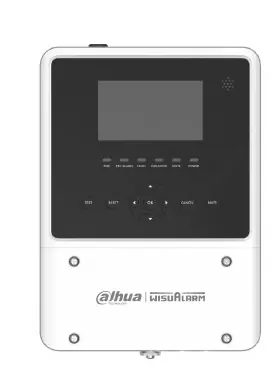
The DHI-HY-ASD610B-P is a single-pipe detector with a published sensitivity range of 0.001% to 3% obscuration per meter. Its datasheet lists a maximum pipe length of 79 m, up to 16 sampling holes, and up to 711 m² monitoring area, subject to approved calculations. It offers five alarm levels, airflow monitoring, event logging, relays, RS485, Ethernet, and USB. Published approvals include VdS, CE, UKCA, and EN 54-20 Class A, B, and C configurations.
DHI-HY-ASD620B-P
The two-pipe DHI-HY-ASD620B-P supports up to 79 m per pipe and a published maximum monitoring area of 1,422 m², subject to the designed network. It uses dual-wavelength particle identification, monitors airflow, and supports five alarm levels.
Maple Armor PipeSense FW2601
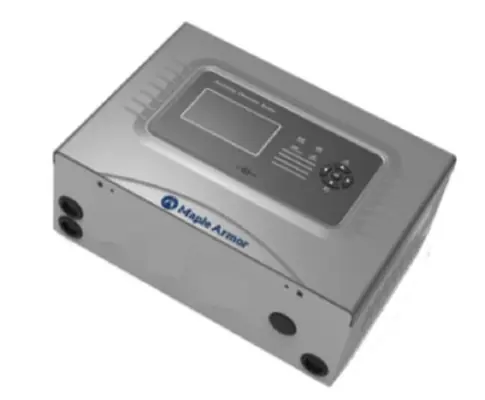
The FW2601 family is available in one-, two-, and four-pipe versions. Each pipe has an independent detection chamber and airflow sensor. Published specifications include 0.001% to 20% obscuration per meter sensitivity, four programmable alarm levels per pipe, RS485 Modbus, nine configurable relays, and 20,000 event records.
Explore FireMarket's aspirating fire detection system range for available detectors and accessories.
Frequently Asked Questions
Is ASD the same as VESDA?
ASD is the general technology category. VESDA is one well-known brand; other manufacturers offer ASD systems with different pipe configurations, sensitivity ranges, approvals, and interfaces.
Can ASD replace point smoke detectors?
An approved ASD design may provide the required smoke detection function in some projects. In others, it supplements point detection. The decision must follow the fire strategy, code, product approval, and authority requirements.
Does a longer pipe always mean more coverage?
No. Airflow balance, hole size, transport time, detector sensitivity, room geometry, and applicable spacing rules determine whether the network performs correctly.
Can ASD be used in dusty environments?
It can be suitable when the detector and design include appropriate dust discrimination, filtration, cleaning provisions, and maintenance. A site assessment is essential.
Plan Your ASD System
ASD performance depends on the detector, pipe network, sampling strategy, airflow, alarm settings, installation, and commissioning working together.
FireMarket can help distributors, contractors, consultants, and project buyers compare suitable configurations. Contact FireMarket and send us your drawings, site conditions, required approvals, and integration requirements to discuss your project.