
Industrial Gas Detection Guide
How to Select a Toxic Gas Detector for Industrial Applications
A practical comparison of fixed, diffusion-type and portable pump-suction detectors, with verified examples from the FireMarket product range.
- Fixed vs. portable selection
- 4–20 mA, RS485 and HART
- IP66 and hazardous-area options
- Five real product examples
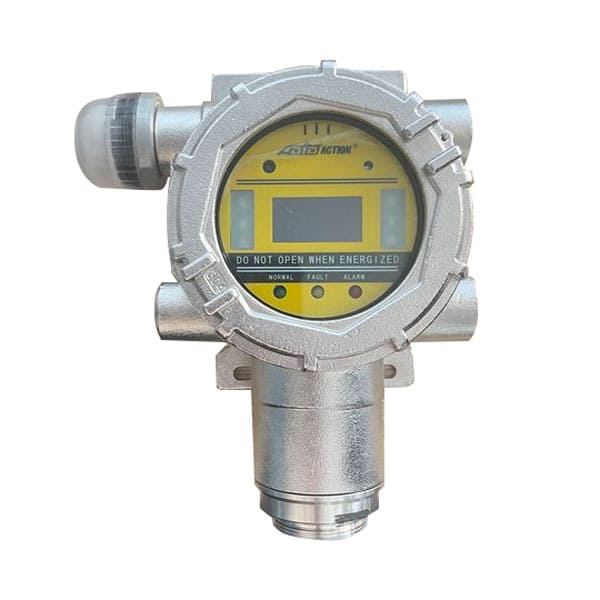
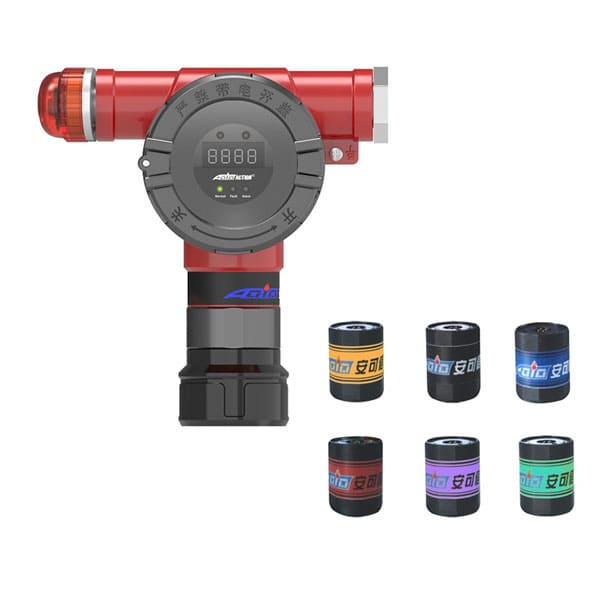
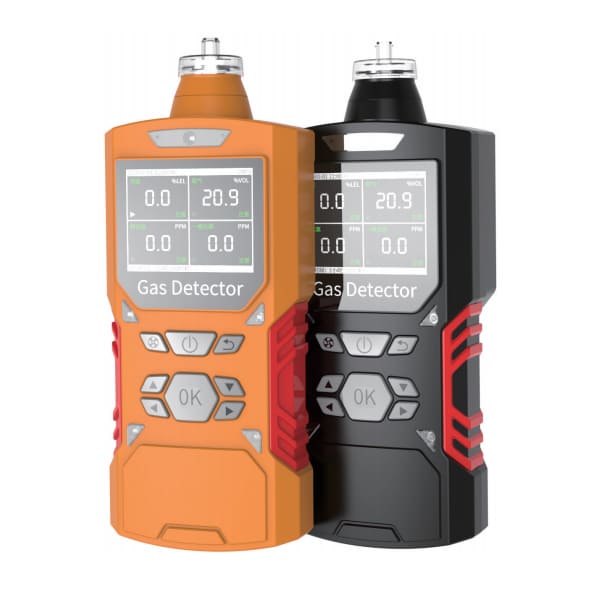
Selecting a toxic gas detector begins with the gas hazard, not the enclosure or display. The target gas, measurement range, installation method, sampling method and control-system interface must all be confirmed before a model is selected.
A fixed detector installed beside process equipment serves a different purpose from a portable instrument used for pre-entry testing. Likewise, a detector connected to a PLC or DCS may need a different output from a local standalone alarm device.
1. Begin With the Gas and the Monitoring Task
Industrial toxic gas applications commonly require electrochemical or photoionization sensing, depending on the gas and detector configuration. The AEC2232bX product page, for example, lists carbon monoxide and hydrogen sulfide among its toxic gas examples and identifies electrochemical and photoionization as toxic-gas detection principles.
- Identify the gas Define the exact gas or gas mixture and the required measuring range.
- Choose the monitoring method Decide between permanent fixed monitoring and portable inspection.
- Match the system interface Confirm 4–20 mA, RS485, HART, relay and controller requirements.
2. Fixed Toxic Gas Detector or Portable Detector?
Fixed detector
Suitable for continuous monitoring near process equipment, storage areas, production lines, gas distribution points and other defined risk locations.
Portable detector
Suitable for pre-entry testing, maintenance inspections, confined-space checks and temporary measurements at multiple locations.
Portable instruments can complement a fixed gas detection system, but they should not automatically be treated as a permanent substitute where continuous monitoring is required.
3. Toxic Gas Detector Product Examples
AEC2232bX
A fixed diffusion-type detector for industrial toxic or combustible gas configurations, with a SUS316 main enclosure and several signal options.
- CO and H₂S listed as toxic gas examples
- Electrochemical or photoionization options for toxic gas
- Standard 4–20 mA output
- Optional HART, ABUS+ or RS485
- Three relay outputs
- OLED display
- IP66 protection
- −20°C to +75°C operating temperature
- DC 24 V ±6 V
- 214 × 138 × 85 mm; 4.5 kg
GTYQ-AEC2232B
A fixed detector intended for toxic and combustible gas monitoring in industrial environments, with modular sensor replacement and RS485 communication.
- Four-wire RS485 bus
- Ex db ib IIC T4
- IP66 protection
- One relay output
- Published indication error: ±3%
- −40°C to +50°C
- Cast-aluminum enclosure
- Power consumption below 3 W at DC 24 V
- LED display
- RoHS and SIL listed
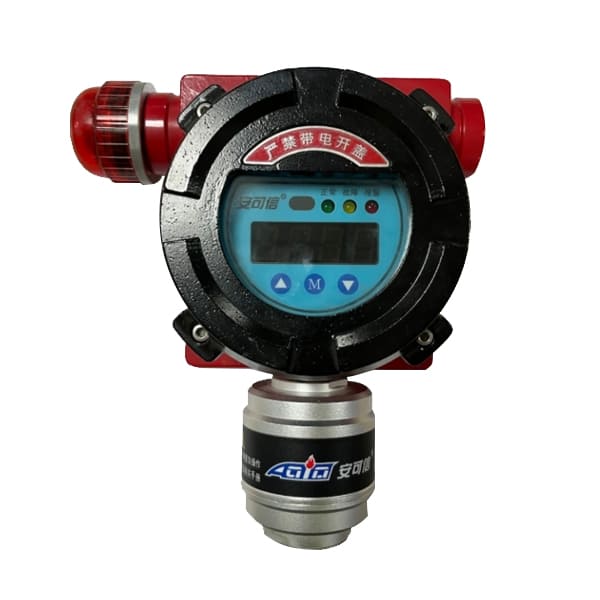
GTYQ-AEC2232BX
A 4–20 mA fixed gas detector with an OLED display, three relay outputs and published HART-related certification.
- Three-wire 4–20 mA output
- Ex db IIC T6 Gb / Ex tb IIIC T85°C Db
- IP66 protection
- Three relay outputs
- −40°C to +70°C
- Cast-aluminum enclosure
- Optional 304 or 316 stainless-steel enclosure
- Power consumption below 3 W at DC 24 V
- OLED display
- CE, EMC, HART, RoHS and SIL listed
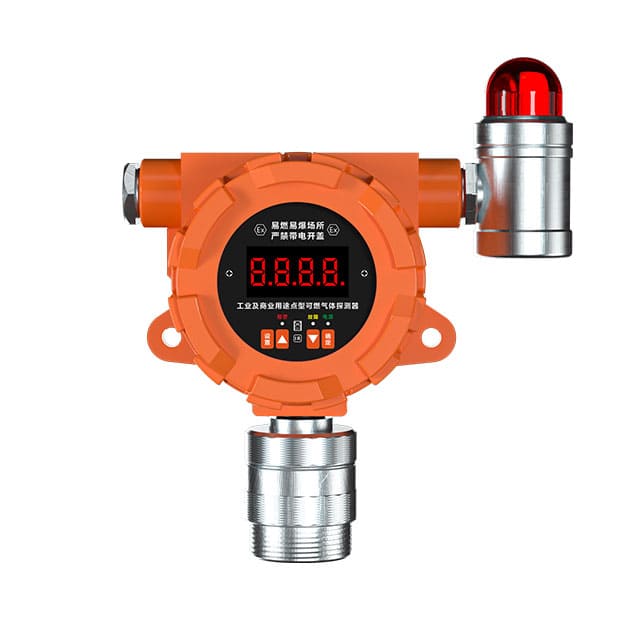
GTY-PLT219-digital
A diffusion-type point gas detector with an LED digital display, built-in audible-visual alarm and RS485 communication.
- Sensor principle selected according to target gas
- Diffusion sampling
- RS485 signal output
- Passive relay, 12–220 V, 2 A
- Remote transmission up to 1,000 m
- Wall or pipeline-integrated installation
- −10°C to +55°C
- 10%–95% RH, non-condensing
- 185 × 140 × 95 mm
- Independent low and high alarm settings
PLT4000
A portable pump-suction instrument supporting four customer-selectable gas detection channels for mobile inspection and pre-entry testing.
- Four configurable gas channels
- Pump-suction sampling
- 2.4-inch color LCD
- High-precision ADC acquisition chip
- 32-bit microprocessor
- More than 20 hours listed with electrochemical sensors
- Micro-USB charging
- CNEX and CE listed
4. Product Comparison
| Model | Type | Sampling | Main output | Display | Protection / environment | Typical selection reason |
|---|---|---|---|---|---|---|
| AEC2232bX | Fixed | Diffusion | 4–20 mA; optional HART, ABUS+ or RS485 | OLED | IP66; −20°C to +75°C | SUS316 enclosure and multiple communication options |
| GTYQ-AEC2232B | Fixed | Product page describes fixed industrial detection | Four-wire RS485 | LED | IP66; −40°C to +50°C | RS485 network and modular replaceable sensor design |
| GTYQ-AEC2232BX | Fixed | Confirm for selected sensor configuration | Three-wire 4–20 mA | OLED | IP66; −40°C to +70°C | 4–20 mA, three relays and HART-related certification |
| GTY-PLT219-digital | Fixed | Diffusion | RS485 and passive relay | LED digital | −10°C to +55°C; 10%–95% RH | Local audible-visual alarm and up to 1,000 m transmission |
| PLT4000 | Portable | Pump-suction | Portable local instrument | 2.4-inch color LCD | Confirm selected sensor configuration | Four-gas mobile inspection and pre-entry testing |
5. Match the Detector to the Control System
4–20 mA
A 4–20 mA signal can transmit the measured concentration to a compatible gas controller, PLC or DCS. The AEC2232bX provides a standard 4–20 mA output, while the GTYQ-AEC2232BX is listed as a three-wire 4–20 mA model.
RS485
RS485 is relevant when the project requires digital communication with a compatible monitoring system. The GTYQ-AEC2232B uses a four-wire RS485 bus, while the GTY-PLT219-digital also provides an RS485 signal output.
HART and relay outputs
The AEC2232bX lists 4–20 mA with HART as an optional output. Relay quantities also differ by model: the GTYQ-AEC2232B provides one relay, while the AEC2232bX and GTYQ-AEC2232BX list three relay outputs.
6. Check the Installation Environment
The detector must suit the actual minimum and maximum temperature, humidity, dust exposure, corrosion risk, washdown conditions and hazardous-area classification.
7. Information to Prepare Before Requesting a Quotation
- Target gas or gases
- Required measuring range
- Fixed or portable detector
- Diffusion or pump-suction sampling
- Required alarm thresholds
- Indoor or outdoor installation
- Minimum and maximum temperature
- Hazardous-area classification
- Required enclosure material
- 4–20 mA, RS485, HART or another output
- Relay quantity and contact rating
- Controller, PLC or DCS interface
- Local display and audible-visual alarm needs
- Required certifications
- Calibration and sensor replacement plan
- Installation position and cable distance
8. Frequently Asked Questions
What is the difference between a fixed and portable toxic gas detector?
A fixed detector is installed permanently for continuous monitoring at a defined location. A portable detector travels with the operator and is used for inspection, leak investigation or pre-entry atmosphere testing.
Can one toxic gas detector measure every toxic gas?
No. The sensor principle, gas calibration, measuring range and alarm settings must match the target gas. Detector support should be confirmed for each required gas.
When should a project use 4–20 mA instead of RS485?
The choice depends on the gas controller, PLC or DCS architecture. A 4–20 mA model is suitable for compatible analog input systems, while RS485 is used for compatible digital bus communication.
Can a portable detector replace a fixed gas detection system?
A portable detector is useful for mobile testing but does not automatically replace permanent continuous monitoring in locations where a gas hazard can develop at any time.
Need Help Selecting a Toxic Gas Detector?
Send FireMarket the target gas, measuring range, installation environment, hazardous-area requirement and preferred output signal. We will help compare suitable fixed or portable configurations for procurement.
Contact FireMarketProduct specifications in this article are based on the corresponding FireMarket product pages available at the time of publication. Final sensor type, range, certification and configuration should be confirmed in the quotation and technical datasheet before ordering.