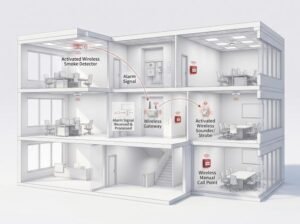
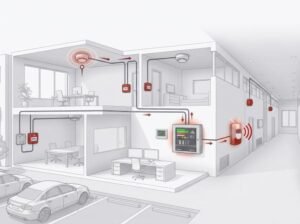
An addressable fire alarm system assigns a unique address to each connected device, allowing the control panel to identify the exact device sending an alarm signal. This helps building operators identify alarm locations and monitor connected devices across different areas. But where are these systems most commonly used? This guide explores addressable fire alarm system applications across different types of buildings and facilities.
What Makes Addressable Fire Alarm Systems Suitable for Different Buildings?
Precise Detection and Identification
Pinpoints the device reporting an alarm, helping building staff locate potential fire incidents more efficiently.
Flexible System Management
Supports centralized monitoring of devices across multiple floors and functional areas, making it suitable for complex building layouts.
Simplified Maintenance & Expansion
Helps identify device faults and supports system expansion, depending on system capacity and design.
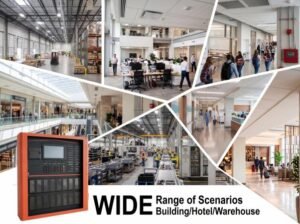
These features make addressable fire alarm systems suitable for a range of environments, including commercial buildings, healthcare facilities, educational institutions, warehouses, and industrial facilities.
Common Applications of Addressable Fire Alarm Systems
Addressable fire alarm system applications vary depending on a building’s layout, occupancy, and fire risks. The following examples explain how these systems can support fire alarm management in different environments.
Office Buildings and Business Centers
Office buildings and business centers often span multiple floors, with open-plan workspaces, meeting rooms, shared facilities, and offices occupied by different tenants. When an alarm occurs, facility teams need to identify the affected area quickly, particularly in buildings where several floors and departments operate simultaneously.
An addressable fire alarm system can display the identity and configured location of the device reporting an alarm, helping staff narrow down the search to a specific room, corridor, or office area. This is especially useful in multi-tenant buildings, where locating the source of an alarm can help building management coordinate access to the affected area.
Hotels and Hospitality Buildings
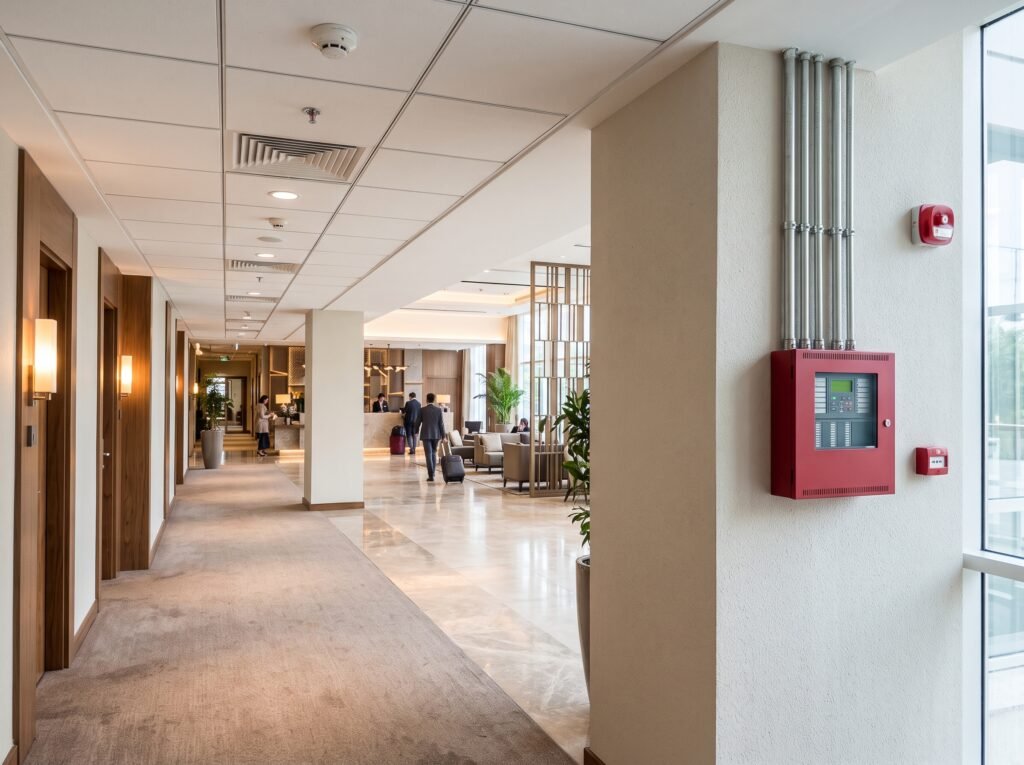
Hotels operate around the clock and contain a mix of guest rooms, corridors, restaurants, kitchens, and conference areas. Guests may be unfamiliar with the building layout, and some may be asleep when an alarm occurs, making clear alarm information and effective evacuation planning particularly important.
In hotels, alarm information needs to support a prompt response across guest rooms, kitchens, corridors, and public areas. An addressable system helps staff identify the affected location, while appropriate detection devices and alarm notification arrangements support the different needs of guests and hotel operations.
Shopping Malls and Retail Complexes
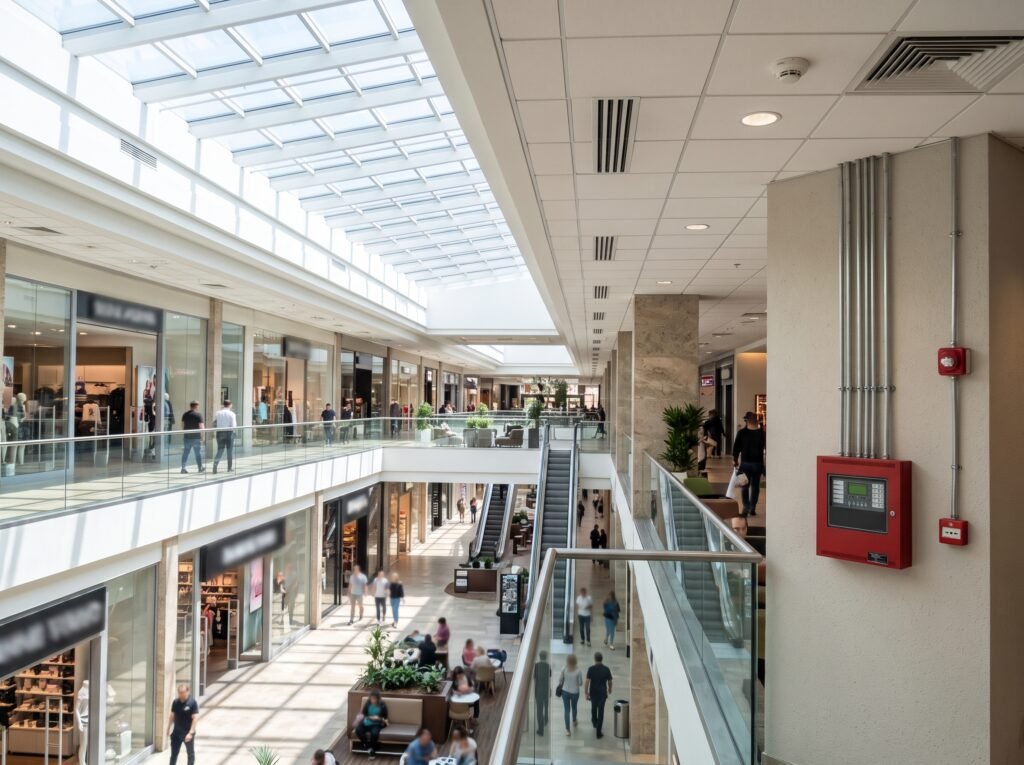
Shopping malls bring together retail stores, restaurants, cinemas, parking areas, and back-of-house facilities within a single building complex. With large visitor numbers and multiple tenants operating in different areas, identifying the location of a fire alarm can be challenging, particularly in malls with several floors and interconnected spaces.
Shopping malls need to manage fire alarms across busy public spaces, individual retail units, food courts, and parking facilities. An addressable system helps staff identify the affected area and coordinate a response while minimizing confusion in large, multi-tenant environments.
Hospitals and Healthcare Facilities
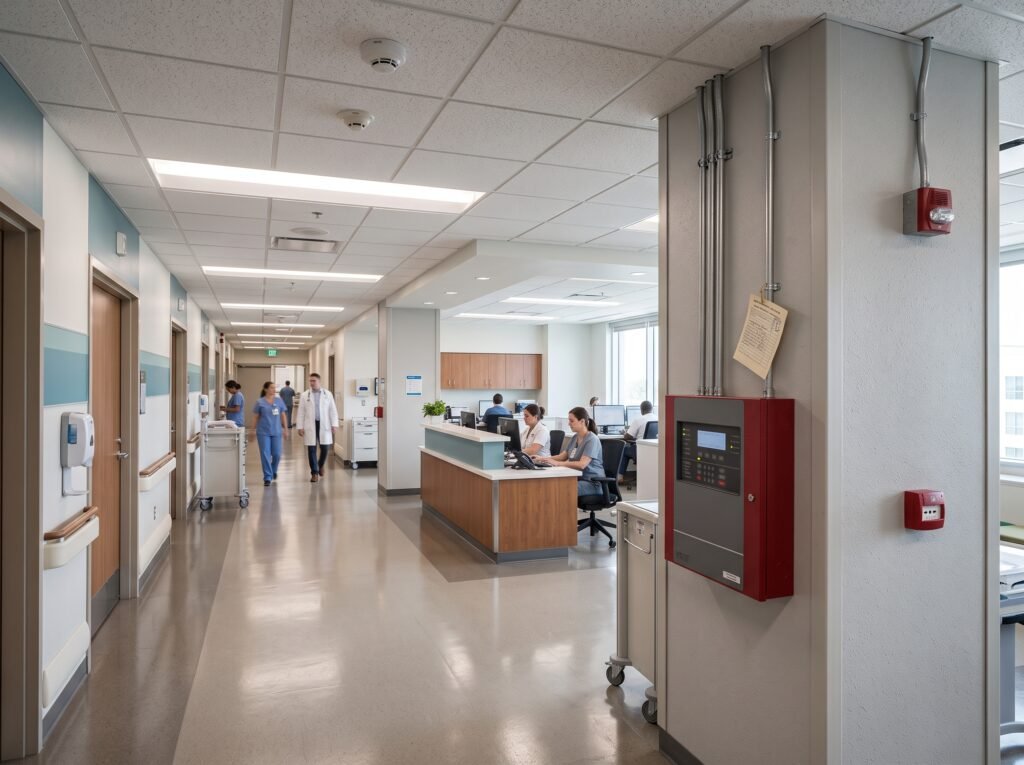
Hospitals contain a wide range of spaces, including patient rooms, operating theatres, laboratories, imaging departments, pharmacies, and public waiting areas. Unlike ordinary commercial buildings, some occupants may be unable to evacuate independently, while clinical activities and sensitive equipment may require carefully coordinated emergency responses.
An addressable fire alarm system can help hospital staff identify the specific device reporting an alarm and its configured location, making it easier to determine which department or room is affected. This information can help staff coordinate their response while taking the needs of patients and ongoing clinical activities into account. Detector types and alarm notification arrangements should also be selected according to the conditions and requirements of each area.
Educational Institutions
Schools, colleges, and universities typically include classrooms, science laboratories, libraries, cafeterias, sports facilities, and sometimes student accommodation. Larger campuses may also have several buildings with different occupancy patterns throughout the day. These varied environments require fire alarm systems that can identify incidents across different rooms and facilities.
An addressable fire alarm system helps staff identify the location of an alarm across different campus facilities, supporting a more targeted response. In laboratories, detector selection should also account for the activities, equipment, and environmental conditions that may affect fire detection.
Warehouses and Logistics Centers
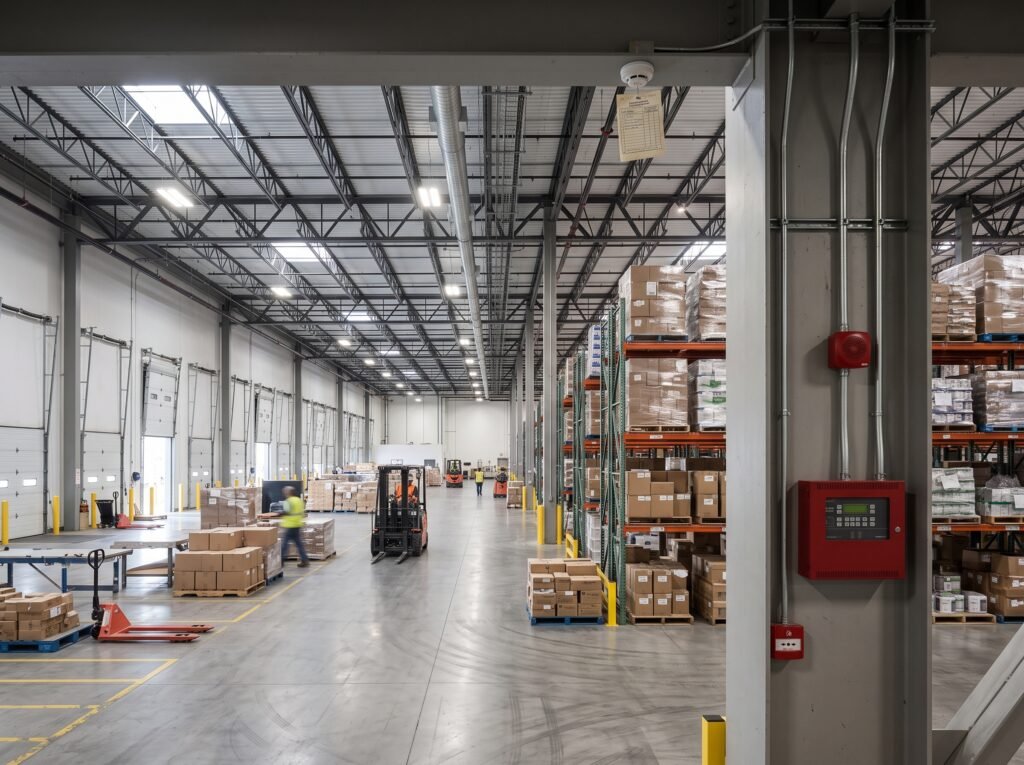
Warehouses and logistics centers often feature high storage racks, large open floor areas, loading bays, and forklift operating zones. Combustible packaging and densely stored goods can contribute to fire spread, while high ceilings and rack arrangements may affect how smoke reaches detection devices. These conditions make detector placement an important part of warehouse fire alarm design.
An addressable fire alarm system helps operators identify which detector has reported an alarm or fault across a large storage facility. For example, if a signal comes from a particular rack aisle or loading area, staff can focus their initial investigation on that location rather than searching the entire warehouse.
Industrial and High-Risk Manufacturing Facilities
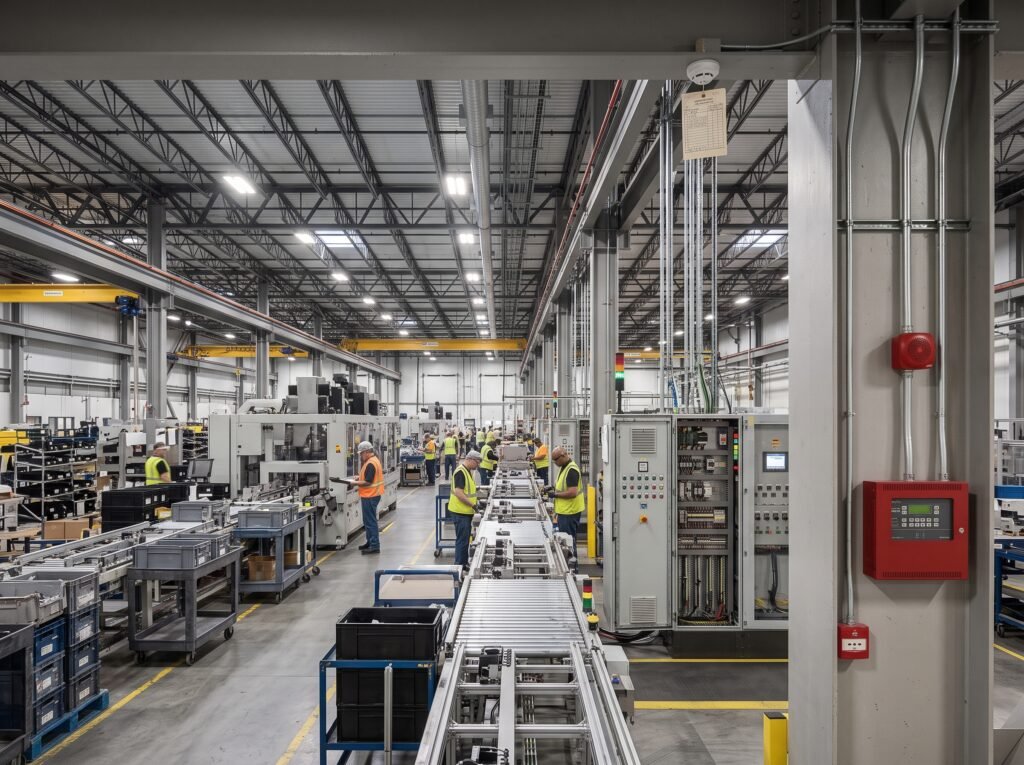
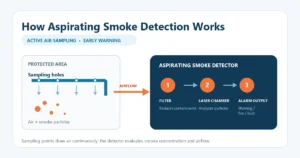
Manufacturing facilities may contain production lines, machinery, electrical control panels, workshops, and areas where flammable materials or combustible dust are present. Continuous operations and potential fire hazards make reliable fire detection important, particularly in areas where staff may not always be present. Detector selection should account for the specific risks and operating conditions of each area.
An addressable fire alarm system helps staff identify the location of a fire alarm, making it easier to investigate the affected production area. For example, an alarm from a detector near a conveyor system helps staff focus their initial investigation on that area. Detector selection and system design should reflect the facility’s operating conditions and fire risks.
How to Determine Whether an Addressable System Is Right for Your Building?
Before selecting a system, consider the building’s layout, occupancy, fire risks, future expansion plans, applicable fire safety standards, and budget. A qualified fire protection professional can assess these factors and recommend a suitable system design and detector configuration.
Looking for a Fire Alarm Solution for Your Building
Explore FireMarket’s fire alarm products or contact our team to discuss your project requirements.
Can You Install an Addressable Fire Alarm System Yourself?
Addressable fire alarm systems require more than physical installation. Device addressing, control panel programming, system configuration, and testing must be completed correctly to ensure reliable operation. For this reason, installation and commissioning should be handled by qualified fire protection professionals in accordance with the manufacturer’s instructions and applicable local regulations.
Can an Addressable Fire Alarm System Be Integrated with Other Building Safety Systems?
Yes. Depending on the system’s design and compatibility, an addressable fire alarm system can be integrated with other building safety systems, such as smoke control, emergency notification, and building management systems. Proper design, programming, and testing are essential to ensure that connected systems respond correctly and operate reliably during an emergency.
What Is the Difference Between Addressable and Conventional Fire Alarm Systems?
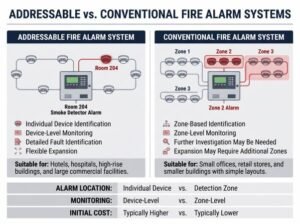
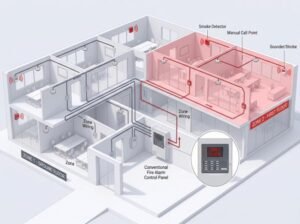
Addressable systems identify the specific device reporting an alarm, while conventional systems identify the zone where the alarm originates. Addressable systems often suit complex buildings, while conventional systems may suit smaller, simpler buildings.
Are Addressable Fire Alarm Systems Suitable for Small Buildings?
Yes. Addressable systems can be suitable for small buildings, especially when device-level identification, future expansion, or specific project requirements are important. For smaller buildings with simpler layouts, a conventional system may also be a practical and cost-effective option.
What Factors Should Be Considered When Choosing an Addressable Fire Alarm System?
Consider the building’s size, layout, occupancy, fire risks, system capacity, future expansion needs, applicable standards, and budget. A qualified professional can help determine the right configuration.