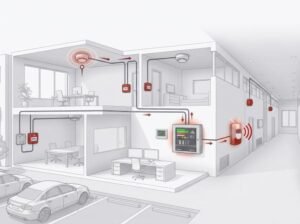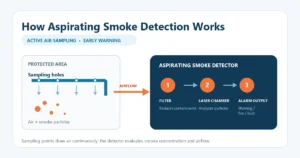

Addressable vs Conventional Fire Alarm System: How to Choose the Right System
When comparing an addressable vs conventional fire alarm system, the main differences lie in how alarms are identified, devices are monitored, and the system can be expanded. Addressable systems provide device-level identification, making them suitable for larger or more complex buildings, while conventional systems use zone-based monitoring and can be a practical choice for smaller buildings with straightforward requirements. The right system depends on building layout, monitoring needs, budget, and future expansion plans.
Table of Contents
Recommended Products

LPCB 1-4 Loops Fire Alarm Control Panel

LPCB Ceiling Mount Smoke Detector

Addressable Manual Call Point
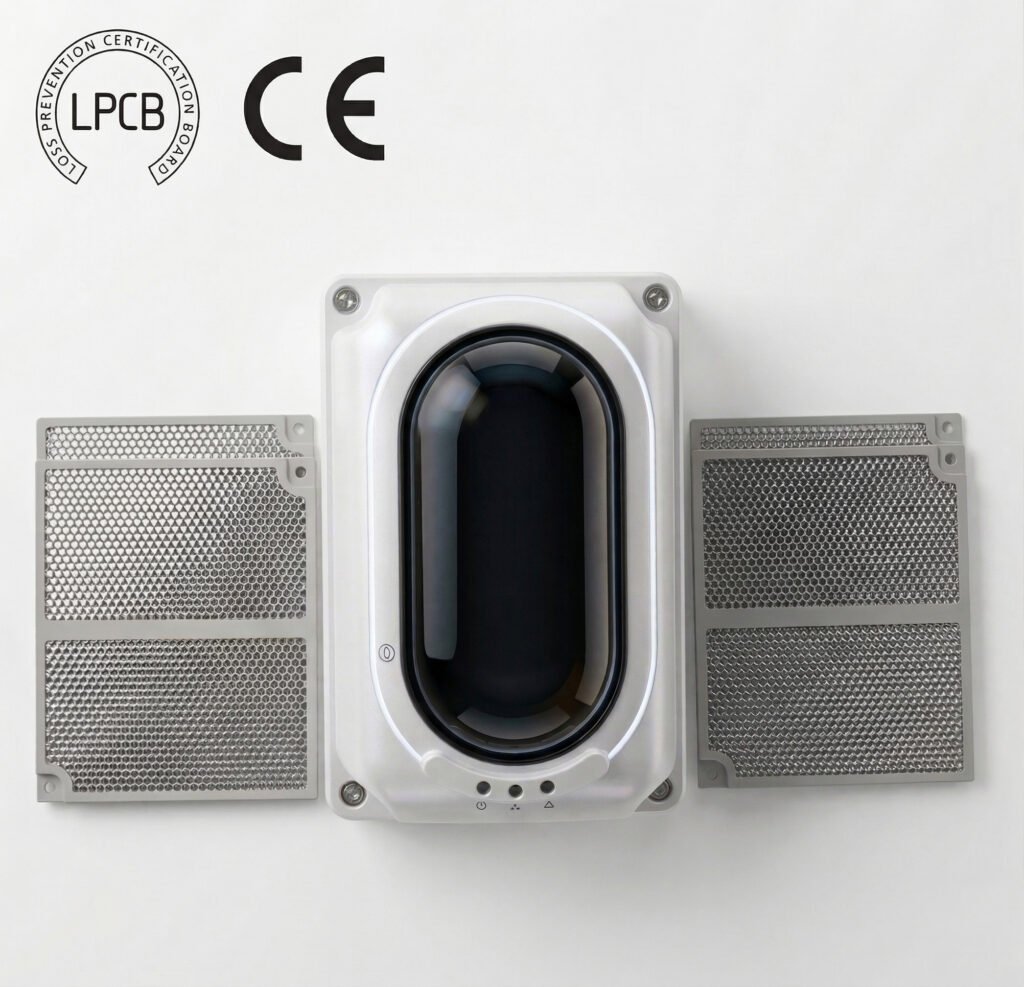
Conventional Reflective Beam Detector
Need Help Choosing?
What Is an Addressable Fire Alarm System?
When a fire alarm is triggered in a large building, identifying the specific device that detected the potential fire can help personnel respond more efficiently. An addressable fire alarm system is designed to provide this level of identification.
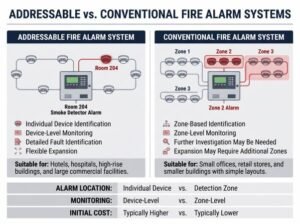
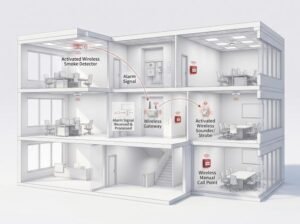
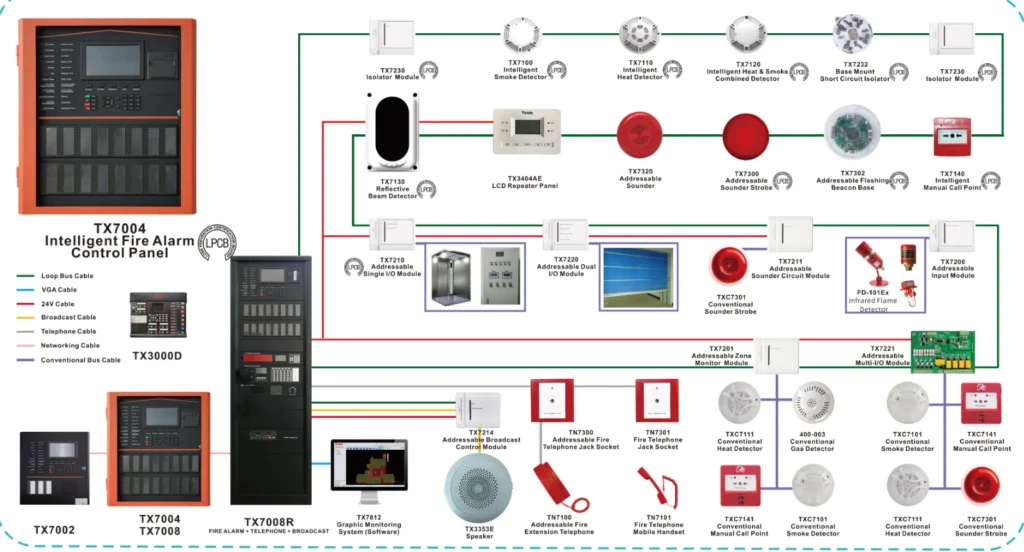
In this type of fire detection system, each compatible device, such as a smoke detector, heat detector, or manual call point, is assigned a unique address. This allows the fire alarm control panel (FACP) to identify the device reporting an alarm or fault, rather than indicating only the general area where the event occurred.
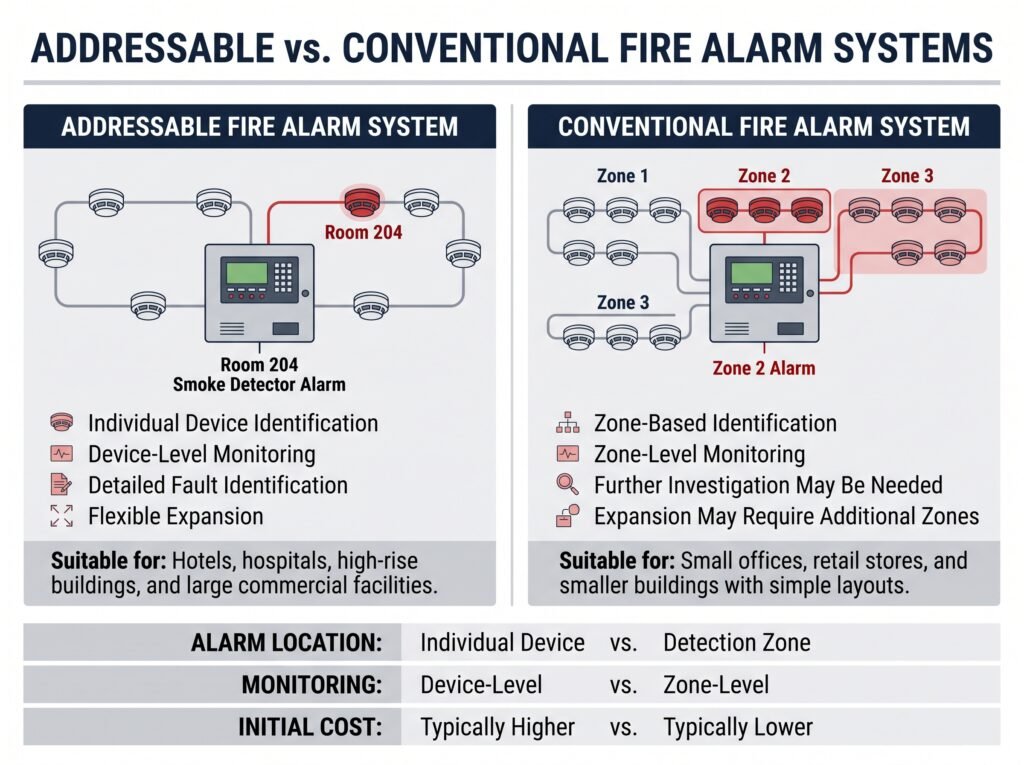
Connected devices communicate with the control panel through a communication loop, allowing the panel to monitor their status and receive relevant information. When a device detects a potential fire or develops a fault, the panel can display its address and programmed location, such as the floor or room where it is installed.
This level of detail can simplify alarm investigation, fault diagnosis, and routine maintenance. Addressable systems are particularly useful in buildings where precise device identification and detailed system monitoring are important.
What Is a Conventional Fire Alarm System?
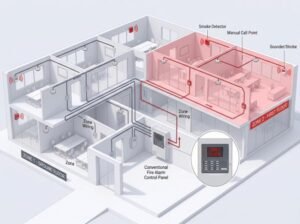
Unlike addressable systems, which can identify individual devices, conventional fire alarm systems identify alarms by detection zone. This zone-based approach helps narrow down the location of a potential fire, although further investigation may be needed to identify the specific device involved.
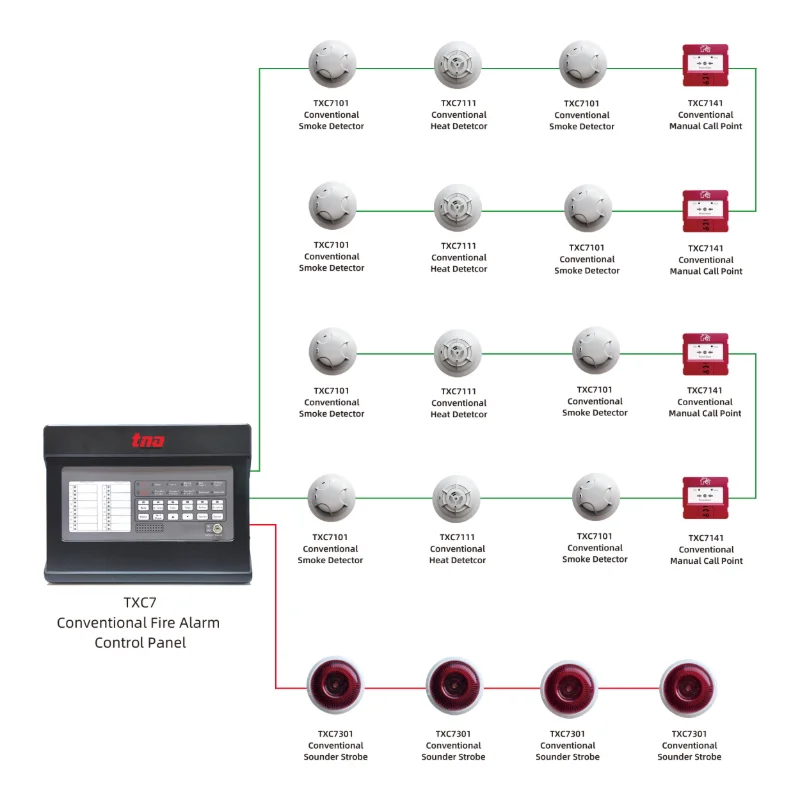
In a conventional system, smoke detectors, heat detectors, and manual call points are grouped into detection zones and connected to the fire alarm control panel (FACP) through zone circuits. Each circuit covers a designated area of the building, allowing the panel to indicate which zone has triggered an alarm.
For example, if an alarm is reported in Zone 2, personnel know which area requires attention but may need to inspect the devices within that zone to locate the source. This zone-based approach provides a straightforward way to monitor fire alarms in buildings with simpler detection requirements.
Conventional fire alarm systems can be a practical option for smaller buildings or applications with relatively straightforward monitoring needs. However, locating a specific alarm or fault may require more on-site investigation than with an addressable system. The suitability of either system depends on factors such as building size, layout, zoning requirements, and applicable fire safety regulations.
Addressable vs. Conventional Fire Alarm Systems: Key Differences
When comparing an addressable vs conventional fire alarm system, consider how each system identifies alarms, communicates with devices, monitors faults, and supports future expansion. The following table summarizes the key differences to help you choose the right system for your building.
|
Addressable Fire Alarm System |
Conventional Fire Alarm System |
|
|
Alarm Identification |
Identifies the specific device triggering an alarm or fault. |
Identifies the alarm zone, not the specific device. |
|
System Architecture |
Each device has a unique address. |
Devices are grouped into zones. |
|
Communication |
Communicates with individually addressed devices. |
Monitors zone circuit status. |
|
Wiring Requirements |
Multiple devices can share one loop. |
Uses separate circuits for different zones. |
|
Monitoring |
Monitors individual device status. |
Monitors zone status. |
|
Expansion Capability |
Add compatible devices if system capacity allows. |
May require additional zones or panel upgrades. |
|
Maintenance and Troubleshooting |
Identifies specific device faults. |
Faults may require further investigation within the zone. |
|
Typical Applications |
Hotels, hospitals, high-rise buildings, and large commercial facilities. |
Small offices, retail stores, and smaller buildings with simple layouts. |
How to Choose the Right Fire Alarm System
Choosing between an addressable vs conventional fire alarm system depends on the building’s size, monitoring requirements, budget, and future expansion plans. Both systems can provide effective fire detection, but the right choice depends on the project’s specific needs.
- Building Size and Complexity
Conventional fire alarm systems are often suitable for smaller buildings with simple layouts and fewer detection zones. Addressable systems are generally better suited to larger or more complex buildings where identifying the exact device in alarm is important.
For example, in a hotel with hundreds of guest rooms, an addressable system can identify the specific detector reporting an alarm. This helps staff locate the potential incident more quickly than relying on zone-level information alone.
- Monitoring and Management Requirements
Consider how precisely the building needs to identify alarms and monitor system conditions. Conventional systems typically indicate the affected zone, while addressable systems can provide device-specific information and more detailed fault reporting.
For buildings with complex safety procedures, addressable systems may also support advanced programming, selective notification, and integration with other building systems, depending on the equipment and system design.
- Initial Budget and Long-Term Costs
Conventional systems generally have lower initial equipment costs, making them a practical option for smaller installations with straightforward requirements.
Addressable systems typically involve higher upfront costs for equipment and programming. However, more precise fault identification and easier troubleshooting may help reduce maintenance time over the system’s service life. Actual costs depend on building size, installation requirements, equipment selection, and ongoing maintenance needs.
- Future Expansion and System Integration
If a building may expand or require additional monitoring and control functions in the future, system capacity and compatibility should be considered from the beginning.
Addressable systems generally offer greater flexibility for device-level monitoring and programming. Conventional systems can also be expanded, but additional zones, circuits, or panel upgrades may be required, depending on the existing configuration.
Before making a decision, confirm that the selected system can meet applicable fire safety regulations, project specifications, and future operational requirements.
Which Fire Alarm System Is Best for Your Building Type?
The best fire alarm system depends on the specific requirements of each building. The following guidelines can help you determine whether a conventional or addressable system is more suitable for your application.
Choose an Addressable Fire Alarm System When
- The building is large or complex, with multiple floors, numerous rooms, or separate tenant spaces.
- Detailed monitoring and individual device identification are required.
- The project requires coordination with systems such as HVAC, elevators, or fire suppression, subject to equipment compatibility and system design.
- The building may be extended, reconfigured, or divided into new spaces.
Choose a Conventional Fire Alarm System When
- The building is small and relatively simple, with clearly defined detection zones.
- The project has a limited upfront budget and does not anticipate significant future expansion.
Make Your Final Decision
The right choice depends on your building’s specific needs, not simply its size or budget. Before making a decision, ensure the selected system meets applicable fire safety regulations and project requirements.
Find the Right Fire Alarm Products for Your Project
Looking for suitable fire alarm products for your project? Explore FireMarket’s product range and contact our team to discuss your sourcing needs.
Frequently Asked Questions
Is an Addressable Fire Alarm System Better Than a Conventional One?
Not always. Addressable systems can identify individual devices and simplify fault diagnosis, making them suitable for large or complex buildings. Conventional systems are often a cost-effective choice for smaller buildings with straightforward detection requirements. The best option depends on the building’s needs, budget, and applicable fire safety regulations.
Are Addressable Fire Alarm Systems Always More Expensive?
Addressable systems often have higher initial equipment and programming costs. However, device-level identification can simplify troubleshooting and maintenance. Conventional systems may cost less upfront, but the total cost of ownership depends on installation, maintenance, system capacity, and future expansion needs. Before choosing a system, compare both initial and ongoing costs.
Can You Upgrade from Conventional to Addressable?
Yes, upgrading is possible, but the scope depends on the existing system and project requirements. Some existing wiring or infrastructure may be reusable, while other installations may require new cabling, compatible devices, or control panel replacement. A qualified fire alarm professional should assess the existing installation and confirm compatibility, costs, and compliance requirements before an upgrade.